

AI Agents Are Following Banks' Shadow IT Playbook
Banks have been through this before
- |
- Written by Shahir Daya, Chief Technology Officer and Head of Zafin AIOS

Banks have been through this before.
Shadow IT spread because business teams could adopt new technology faster than governance could keep up. A team found a useful tool, deployed it quickly, and IT did not know about it until an audit or an incident forced the conversation. The pattern repeated across hundreds of institutions before most of them built the structures to manage it.
AI agents are following the same playbook. A team can deploy an agent in hours and days without anyone taking a broader view of how it fits into the bank’s operating model. The difference is that agents do not simply introduce another technology to govern. They introduce another participant in how work gets done. This emerging pattern of ungoverned AI deployments spreading across the organization faster than governance frameworks can be adapted is what we call Shadow AI.
That shift is happening faster than governance is maturing. Deloitte’s research on AI in banking risk management found that only 21% of organizations have a mature governance model for autonomous AI agents. The gap between how fast agents are being adopted and how well they are being governed is where the real risk sits.
The reason that gap is widening has less to do with urgency than with architecture. Banks were built for a workflow where humans initiated work, executed it, reviewed it, and documented it across systems. Authority was clear because a person sat at every decision point. Agents create a different operating model. People define intent and set the boundaries of authorized work. Agents execute within those boundaries, accessing systems, routing models, and moving tasks. The evidence of that execution should be captured as it happens, not assembled afterward. Most banks have not built the architecture to make that end-to-end chain traceable from intent to governed outcome.
The result is a set of problems that compound quickly. Agents are typically governed by the teams that built them. Lending has its own view of what its agents are authorized to do. Compliance has another. Operations has a third. Ask a bank today what data a given agent can access, what decisions it can make without human authority in the loop, or what it has cost the institution over the past quarter, and the honest answer in most cases is that nobody has a complete picture. That is not because the teams involved are negligent. It is because the operating model is not designed to surface that information across organizational lines.
The gaps show up most visibly under pressure: an audit finding, a regulatory inquiry, a risk committee asking for a decision trail. At that point, the bank is not answering a compliance question. It is reconstructing evidence that should have been built into the work path from the start. Many banks can describe what an agent did. Fewer can demonstrate why it acted, what it was authorized to do, and whether a person with that authority reviewed the outcome when policy required it. The distinction between recording that work happened and proving it happened within governed parameters is what regulators will increasingly draw.
The instinct when you see this pattern is to slow the deployment down. That is the wrong move. Banks getting the most value from agents are not the cautious ones. They are the ones that built governance into the architecture before scaling, treating it as the operating foundation that makes agent programs expandable rather than the friction that eventually stops them.
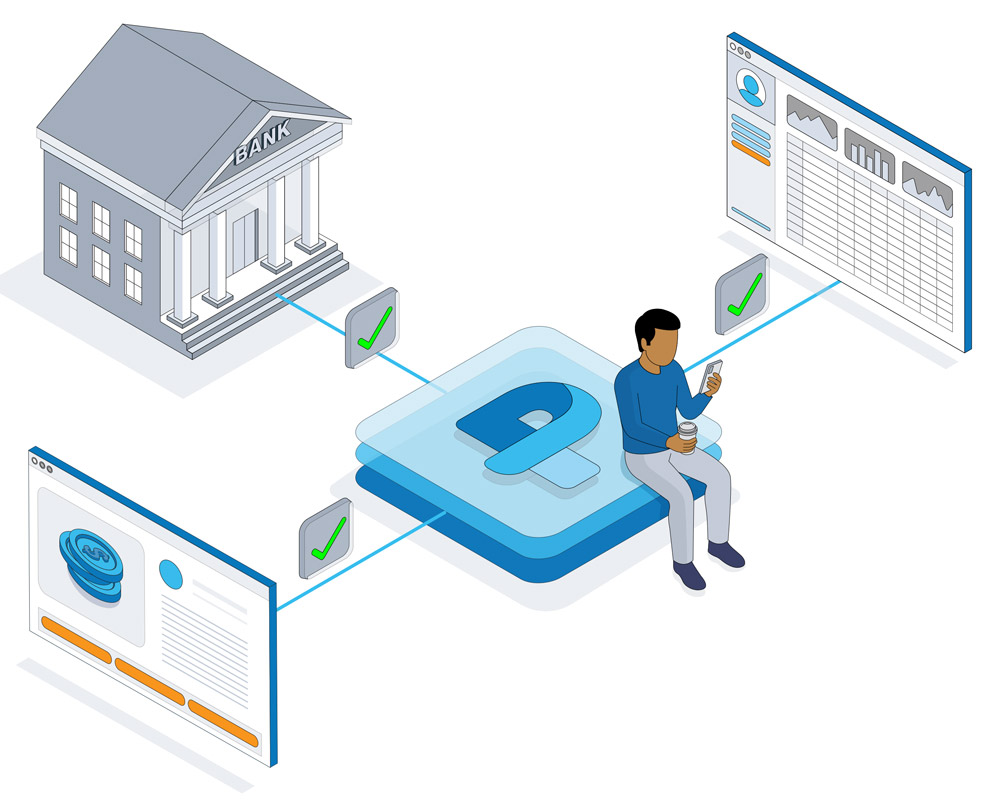
What that requires is a control plane that spans all agent deployments regardless of which team built them: where authority sits, what data can be accessed, when human sign-off is required, and what proof is generated as work moves from intent to outcome. That is the operating infrastructure that makes it possible for a risk committee or a regulator to see the full picture, and for the institution to expand what is working with confidence.
Banks have demonstrated they can move fast on pilots. Successful agent deployments across lending, operations, and compliance are now common. The harder question is whether those programs stay siloed at the team level or whether the institution can see across all of them, govern the portfolio under a single authority model, and build on what is working at scale.
Shadow IT took most institutions the better part of a decade to bring under real governance. Part of that was technology. Most of it was that institutions failed to recognize it as an operating model problem. Every year without governance architecture accumulates governance debt: decisions made without traceable rationale, agents operating without registered authority, costs growing without a complete picture. Banks that recognize the pattern early and build the architecture to match will not just be more defensible. They will move faster, because agents operating inside a governed architecture can be expanded with confidence in ways that ungoverned ones cannot.
Shahir Daya is Chief Technology Officer and Head of Zafin AIOS. He leads technology strategy across Zafin while directing the vision and build of Zafin AIOS, the company’s end-to-end autonomous platform for agentic work.
Tagged under AI; Artificial Intelligence; Feature; Feature3;