


Banking Exchange Speaks with Stu Bradley, Senior Vice President of Risk, Fraud and Compliance Solutions at SAS
Where AI Projects in Banking Go Wrong and the Struggle for ROI
- |
- Written by Erik Vander Kolk, CEO of Banking Exchange
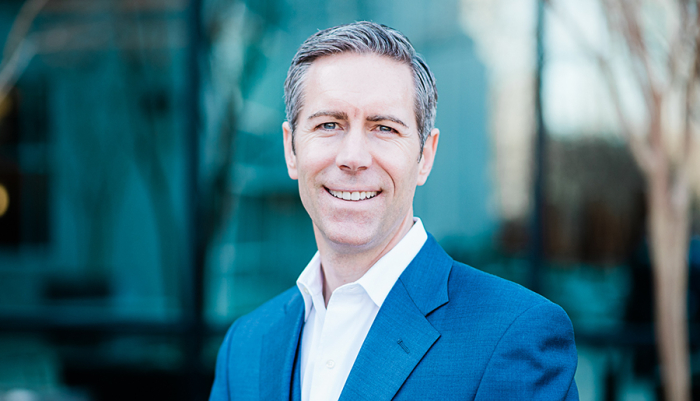 Stu Bradley, Senior Vice President of Risk, Fraud and Compliance Solutions at SAS
Q1. When we first sat down almost two years ago, AI was just emerging in banking. In fact, most financial institutions hadn’t yet implemented any AI solutions. What do you see now?
Stu Bradley: A lot has transpired over the last couple of years. But here’s what I have to call out: the adoption of AI in production environments remains quite low relative to the number of AI projects started and the money invested in AI-driven solutions.
The generative AI hype cycle that started in 2024 was the fastest peak and valley of any hype cycle I've seen in my entire career — and it’s morphed into an agentic AI hype cycle.
Now don't get me wrong — these capabilities are here to stay and will be transformative across industries. But here’s the reality. We didn't see many business cases approved unless they included generative AI. That unfortunately led to banks applying the wrong technology to certain challenges.
Where the technology is mismatched to the business need, it’s no surprise those initiatives aren’t delivering ROI — but CFOs and business leaders are left trying to figure out where they'll see returns.
Much of the issue has been around governance. Understanding the data, the data quality, potential biases and the downstream impacts of unintended consequences — these are real barriers. Our recent data and AI study with IDC confirms this. It found that organizations that prioritize trustworthy AI through governance, explainability and ethical safeguards were 60% more likely to report double or more return on their AI projects.
Q2. There’s growing concern that AI is displacing entry-level workers at financial institutions. Is that what you’re seeing? And if so, how should institutions respond?
Stu Bradley: The personal impacts of AI are absolutely real. Efficiencies drive AI adoption — enhancing or replacing manual tasks — and many business cases are built on headcount reduction. But the pressing question is, how far can this actually go?
I'm a firm believer that organizations that leverage AI to make their people more efficient and better at what they do will be the ultimate winners, not those that are solely using AI to reduce HR costs.
Think about it hypothetically — what if we use AI to help humans innovate faster? Would that make a bigger dent in the fraud that’s so pervasive today? What if AI could help banks develop and test news products in weeks instead of quarters? Or rapidly prototype customized client solutions?
So, in addition to automating mundane tasks, the winners will help their people innovate much faster, creating a much more rewarding work environment as a result.
Q3. Fraud prevention remains a major concern for banks. How are they responding, and what do financial institutions need to do differently now?
Stu Bradley: Fraud is definitely in focus. One of the biggest issues is the pace at which new fraud schemes emerge.
Organized criminal adversaries have massive technology budgets — and unlike the financial institutions they target, they aren’t encumbered by regulators or AI ethics, so they can innovate much faster than banks can keep up.
Effectively combatting these threats comes down to agility. As we discussed last year, business leaders are screaming for the agility to keep pace with their adversaries, even as their IT partners are buckling under the weight of legacy infrastructures. IT has adopted new technology to solve new problems and integrated it as best they could, but maintaining that aging, patchwork infrastructure while serving the business’s agility needs is an impossible challenge.
We're now seeing clear signs in the market a much-needed industry modernization has begun — modernization based upon reducing the complexity of IT environments and working with fewer, more strategic vendors that can deliver the scale and capabilities needed to meet both business and IT expectations.
This modernization won’t just help banks better fight modern-day fraud threats; it will improve banks’ other core functions, as well.
Q4. We’ve discussed the industry’s need to share data, and in a responsible way. How has the industry progressed on this front, and are you optimistic about the future?
Stu Bradley: I remain optimistic, but the industry is progressing more slowly than I’d like, especially around the critical non-competitive areas like protecting the industry and its customers from fraud.
In some ways, the recent proliferation of AI and associated fears around bias and unintended consequences have only further slowed progress. As an industry, we're working through the governance aspects to build a solid foundation for AI such that it can be used much more widely. Once that governance structure is more consistently established, I foresee we’ll see an acceleration in data sharing across institutions.
Q5. At the Banking Exchange National Conference in June, the GENIUS Act and stablecoins emerged as key topics — and they’re among the hottest topic in the industry this fall. How do you see this impacting financial institutions, particularly around security and payments?
Stu Bradley: I was happy to see that key provisions in the GENIUS Act were focused on consumer protection and anti-money laundering. To see security is front and center in what the government is trying to achieve through this act instills confidence.
The impact on banks will be significant. Over the last three years, most banks have focused on deposits and reducing deposit costs as competition intensified. Higher funding costs have weighed heavily on all institutions, but especially regional banks. Cryptocurrency and coins are among the culprits reducing payment margins and shifting focus to deposits.
I think leading banks will look to stablecoins to regain some of that competitive edge and address the disruptors that have upended payments.
With regard to the overall security concerns, I think the biggest issue around stablecoins will be international payments. This is where stablecoins may actually be used more frequently versus domestic payments. So institutions will really need to think about the additional rigor with which they’ll need to monitor these international stablecoin payments.
Q6. There’s growing concern, especially from banks under $100 billion, that cryptocurrency could very well become a mainstream way for customers to hold cash and make payments. How do you see this impacting the banking industry — both institutional and retail side? What role will technology play, and how should banks and credit unions respond?
Stu Bradley: It's interesting that you raise that segment of the market — those under $100 billion. I'll start by saying that the cost of compliance is not linear, and it especially impacts regional and smaller financial institutions. So they’ll need to think differently about how they comply and how they better secure their institutions and prevent illicit transfer of funds.
Leveraging cryptocurrencies will trigger a whole modernization of KYC and customer due diligence capabilities. It's going to result in an expectation of perpetual KYC.
One of the things that financial institutions haven't done well is ensuring that the due diligence they do when onboarding a customer actually aligns with their transactional behaviors after onboarding. I predict we’ll see transactional behavior connected to onboarding due diligence in a perpetual manner.
Q7. SAS is extremely dedicated to responsible AI and data sharing. Can you give us an update on how SAS is leading in this area?
Stu Bradley: These are particular passions of SAS as an organization. We’re participating actively with leading governments on responsible AI and data sharing. And we're working with financial institutions in certain geographies to create consortium views they can use to guide government policymaking in their specific markets.
SAS also continues to launch more AI governance-based solutions to ensure we're meeting the geographic-specific regulations that continue to evolve.
Last but not least, everything SAS is doing, everything we're building, ensures that AI and data governance is built into the core of our solutions on SAS Viya. This gives our customers certainty they can appropriately govern their AI and data.
We want to clear those governance hurdles — and that’s why the core of our capabilities is built on a firm foundation of governance and responsible innovation.
Q8. Lastly, while SAS is a leader in finance, what should we be looking for in other sectors? What is SAS doing that will impact all of our lives in 2026 and beyond?
Stu Bradley: I’m personally very proud and frankly inspired by some of the truly society-transforming work that is underway at SAS.
In government, we're leveraging streaming sensor data for disaster prediction and flood prevention. We’re helping identify fraud, waste and abuse in major infrastructure programs. And we're active globally in preventing tax fraud and social benefits fraud while improving distribution of benefits.
In health care, we’re very focused on health outcomes — ensuring the provision of appropriate and quality care while also optimizing the cost of providing that care. Most importantly, we’re focused on ensuring that patient outcomes are improved through the process.
We're also working with life sciences organizations globally to bring needed therapies to market more quickly and safely. This is truly society-transforming work.
Q9. We've talked about fraud, AI governance and stablecoins. But there are other significant challenges banks are facing. What else should be on the radar for financial institutions heading into 2026?
Stu Bradley: Two critical areas come to mind — both tied to the margin compression and agility issues we've discussed.
First is integrated balance sheet management. Banks need to think differently about capital allocation to drive margins, with greater granularity in their risk-weighted assets.
The interconnectedness of risks is forcing banks to rethink market risk, credit risk and interest rate risk programs while enhancing asset and liability management. The goal is more integrated stress testing and more robust simulation environments for better decisions around things like capital allocation and risk-adjusted capital management, for example.
Second, our previous conversation about decisioning is as relevant today as it was when we spoke last year. Enterprise customer decisioning on a common architecture across the full customer lifecycle — risk, fraud, compliance, sanctions and marketing decisions — is a primary way financial institutions can rationalize IT complexity and deliver the agility need as they progress their on modernization journeys.
Q10. Is there anything else on your mind these days that I didn't touch upon?
Stu Bradley: Beyond the data and AI governance issues that we’ve already covered, one thing worth revisiting is how financial institutions can ensure they're getting real ROI from their AI initiatives.
There's no doubt — and I touched on this earlier — that the hype cycles we've seen have been problematic. Frankly, many vendors, driven by their funding models and short-term time horizons, aren't doing the industry any favors by creating vicious hype cycles. I believe vendors have a fiduciary responsibility to think about the long-term viability of their customers’ AI initiatives, and the industry needs to do better.
At the same time, financial institutions must remain aware of these hype cycles and recognize that just because a new technology comes to market doesn't mean it can solve every problem they're facing. Generative AI is a perfect example — it’s been applied far beyond its intended use cases.
Organizations need to bring a portfolio of AI approaches to the table, so they can align the right approach to the specific business outcome they're trying to achieve. Only then will they achieve AI initiatives that cut through the hype and deliver real value.
Tagged under Risk Management; AI; Artificial Intelligence; Feature; Feature3;
Related items
- Tokenized Deposit Networks: A Practical Guide for the Banking C-Suite
- U.S. Bank Completes First Live USBDC Stablecoin Transaction
- Robinhood Targets Bigger Role in IPO Underwriting
- JPMorgan Cuts Lending to AI-Focused Hedge Fund After Losses
- Social Engineering Is Changing the Fraud Prevention Game for Banks and Credit Unions